| Pelycosaurs Fossil range: Late Carboniferous - Late Permian | |
|---|---|
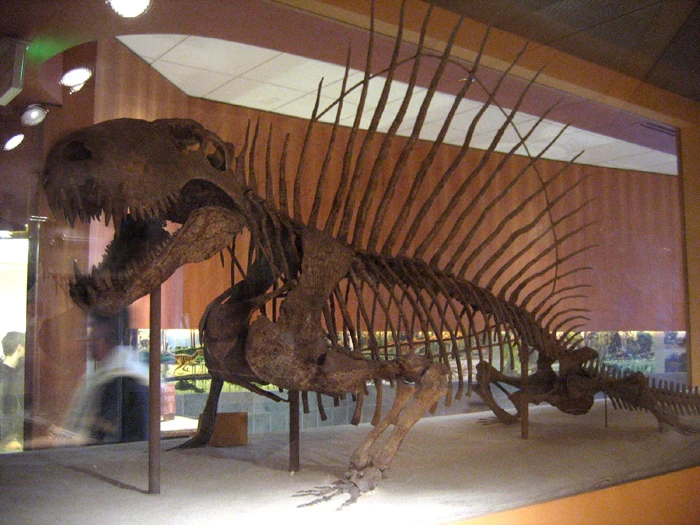 Dimetrodon grandis skeleton at the National Museum of Natural History | |
| Scientific classification
| |
The pelycosaurs were a primitive group of Late Paleozoic synapsid amniotes. Some species were quite large and could grow up to 3 meters or more, although most species were much smaller.
Evolutionary history[]
- See Also: Evolution of mammals
The pelycosaurs appeared during the Late Carboniferous and reached their acme in the early part of the Permian Period, remaining the dominant land animals for some 40 million years. A few continued into the late Permian. They were succeeded by their descendants, the therapsids, which had a short but successful reign before the Permian–Triassic extinction event, giving a chance for the archosaur reptiles to take over in the Triassic.
Characteristics[]
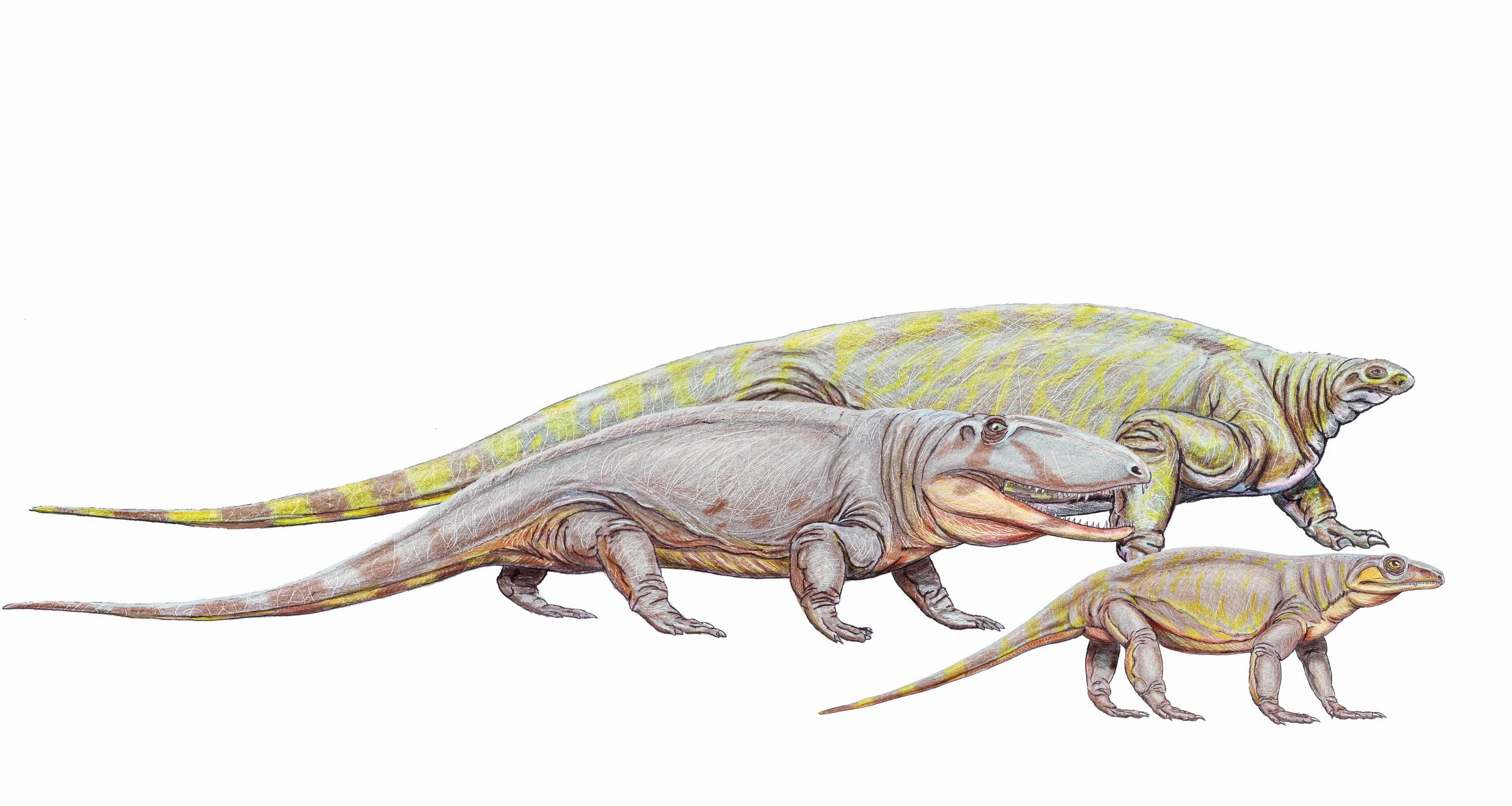

Cotylorhynchus (background), Ophiacodon and Varanops
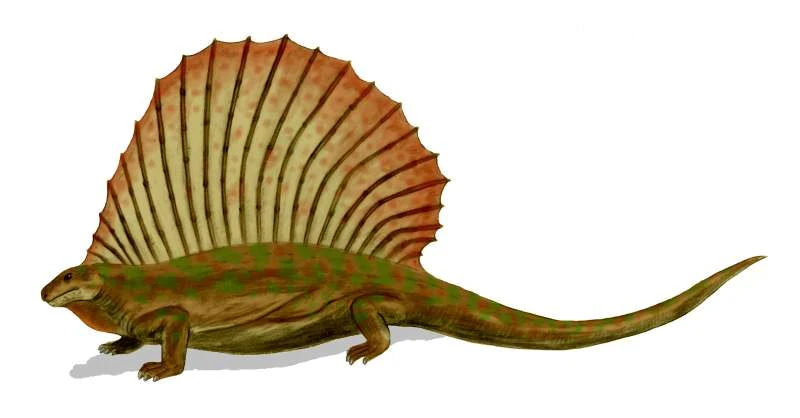
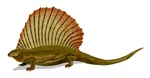
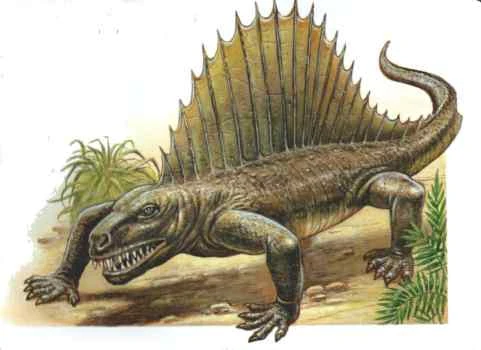
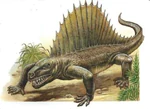
At least two pelycosaur clades independently evolved a tall sail, consisting of elongated vertebral spines: the edaphosaurids and the sphenacodontids. In life, this would have been covered by skin, and possibly functioned as a thermoregulatory device or for mating display. Pelycosaur fossils have been found mainly in Europe and North America, although some small, late-surviving forms are known from Russia and South Africa.
Unlike reptiles, pelycosaurs lacked epidermal scales. Fossil evidence from some ophiacodonts shows that the skin was naked, and that the belly was covered in dermal "scales", the same type of scales possessed by early tetrapods, unrelated to reptile scales, which evolved independently and are a different type of structure.[1]
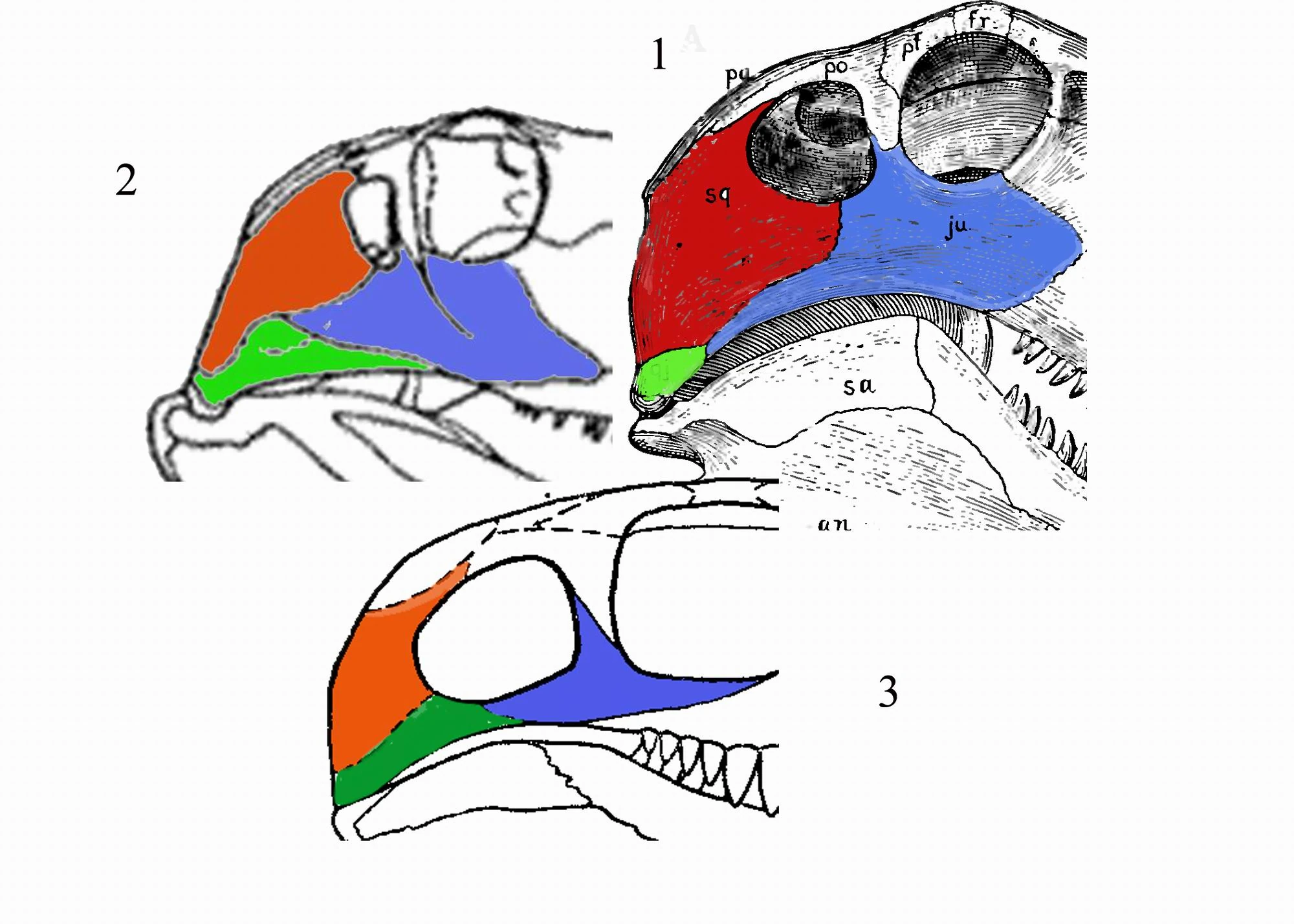

Comparison of "pelycosaurian" skulls: 1 - sphenacodont, 2 - ophiacodont, 3 - caseid. Quadratojugale is green, squamosale is red, jugale is blue.
In 1940 the group was reviewed in detail and every species known at the time described (and many illustrated) in an important monograph by Alfred Sherwood Romer and Llewellyn Price.
Pelycosauria is a paraphyletic taxon because it excludes the therapsids. For that reason the term is not used in some modern books. Eupelycosauria is used to designate the clade that includes most Pelycosaurs along with the Therapsida and the Mammals. In contrast to "Pelycosaurs", this is monophyletic group. Caseasauria refers to a pelycosaur side-branch or clade that did not leave any descendants.
The pelycosaurs appear to have been a group of synapsids that had direct ancestral links with the mammalia, having differentiated teeth and a developing hard palate.
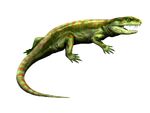
Well-known pelycosaurs include the genera Dimetrodon, Sphenacodon, Edaphosaurus, and Ophiacodon.
Systematics[]
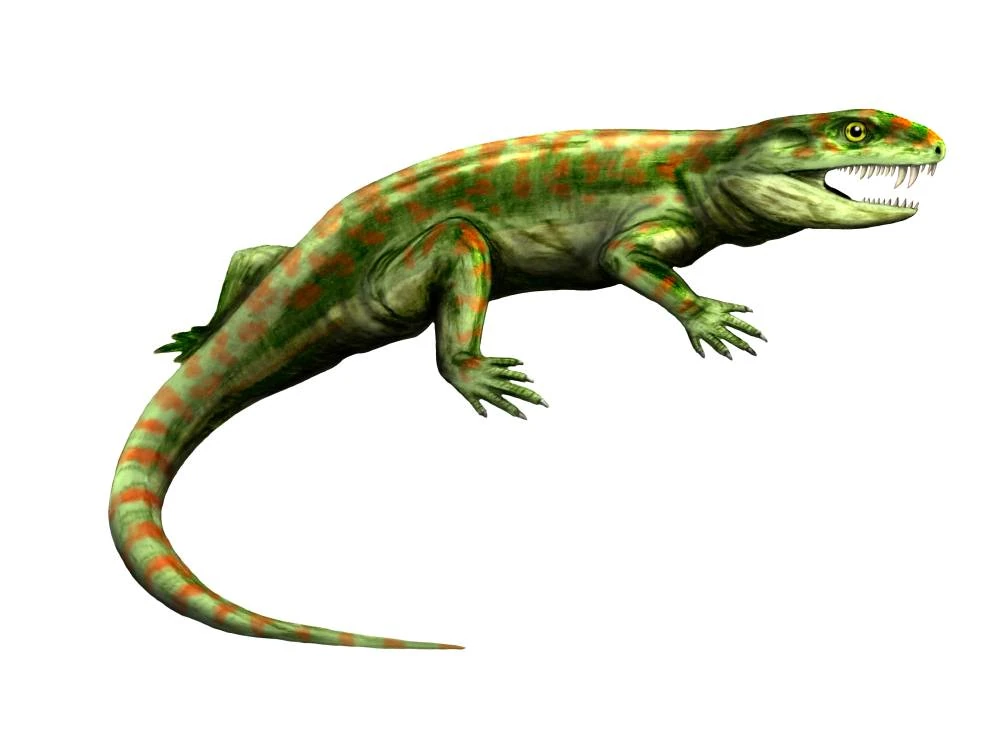

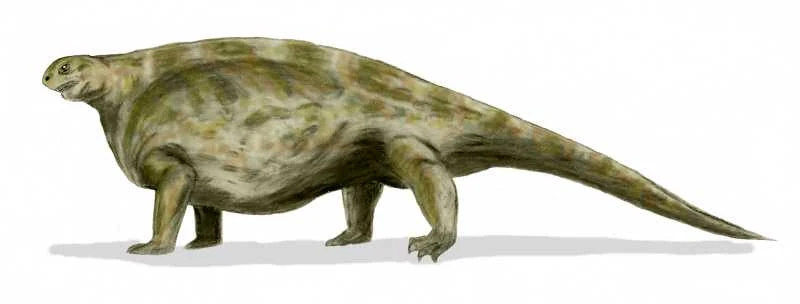

Cotylorhynchus - a Caseid
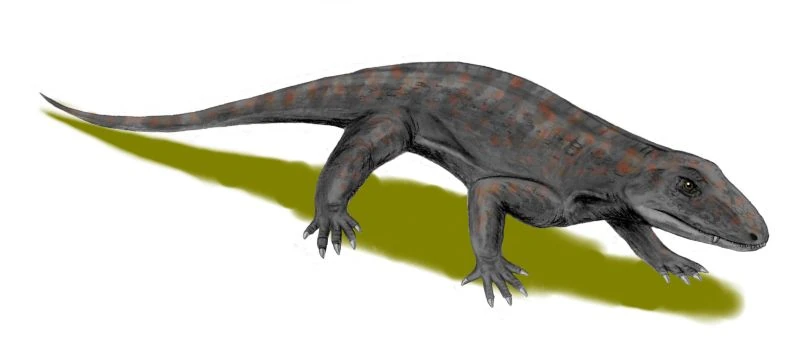

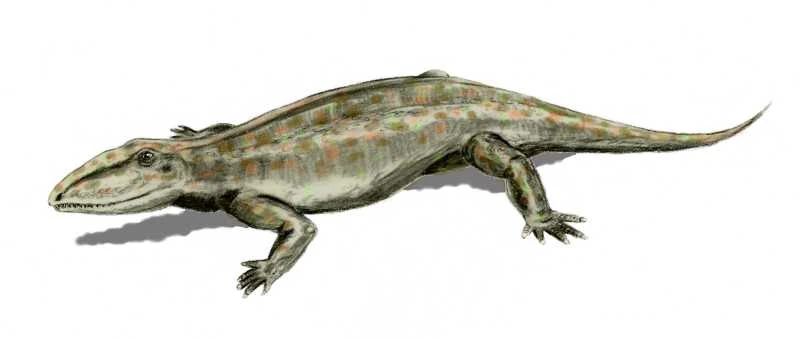


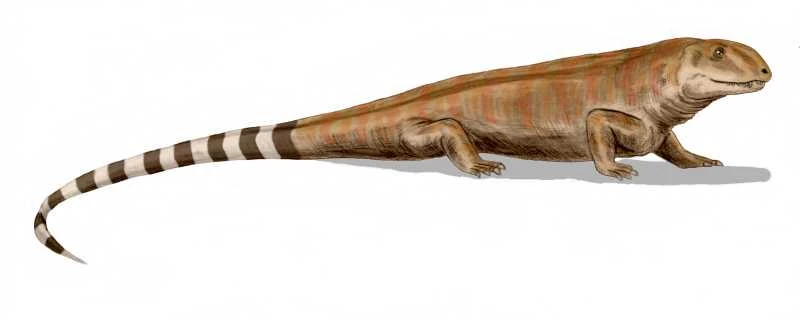


In traditional classification, the order Pelycosauria is paraphyletic--that is, it is a grouping of animals that does not contain all descendants of a common ancestor, as is often required by a different system of naming organisms, phylogenetic nomenclature. In the later, Pelycosauria is treated as a clade rather than a taxon with the rank "order", and includes the clade Therapsida, which in turn contains the clade Mammalia. In traditional taxonomy, Therapsida is separated from Pelycosauria in its own biological order, and mammals are separated from both as their own class.
Taxonomy[]
- Order Pelycosauria*
- Suborder Caseasauria
- Family Caseidae
- Family Eothyrididae
- Suborder Eupelycosauria
- Family Edaphosauridae
- Family Haptodontidae*
- Cutleria
- Haptodus
- Palaeohatteria
- Pantelosaurus
- Family Lupeosauridae
- Lupeosaurus
- Family Ophiacodontidae
- Family Sphenacodontidae
- Family Varanopseidae
- Suborder Caseasauria
- Order Therapsida*
Phylogeny[]
In phylogenetic nomenclature, the "Pelycosauria" is not used, since it does not constitute a clade (a group of organisms descended from one common ancestor and including all the descendants of that ancestor) because the group excludes the therapsids. Instead, it represents a paraphyletic "grade" of basal synapsids leading up to the clade Therapsida.
See also[]
References[]
- ^ Carroll, R.L. (1969). "Problems of the origin of reptiles." Biological Reviews, 44: 393-432.
- Reisz, R. R., 1986, Handbuch der Paläoherpetologie – Encyclopedia of Paleoherpetology, Part 17A Pelycosauria Verlag Dr. Friedrich Pfeil, ISBN 3-89937-032-5
- Romer, AS & Price L.I (1940), Review of the Pelycosauria. Geol. Soc. Amer. Spec. Papers 28: 1-538.
External links[]
- Introduction to the Pelycosaurs - at UCMP
- Synapsida - Pelycosauria - at Palaeos